
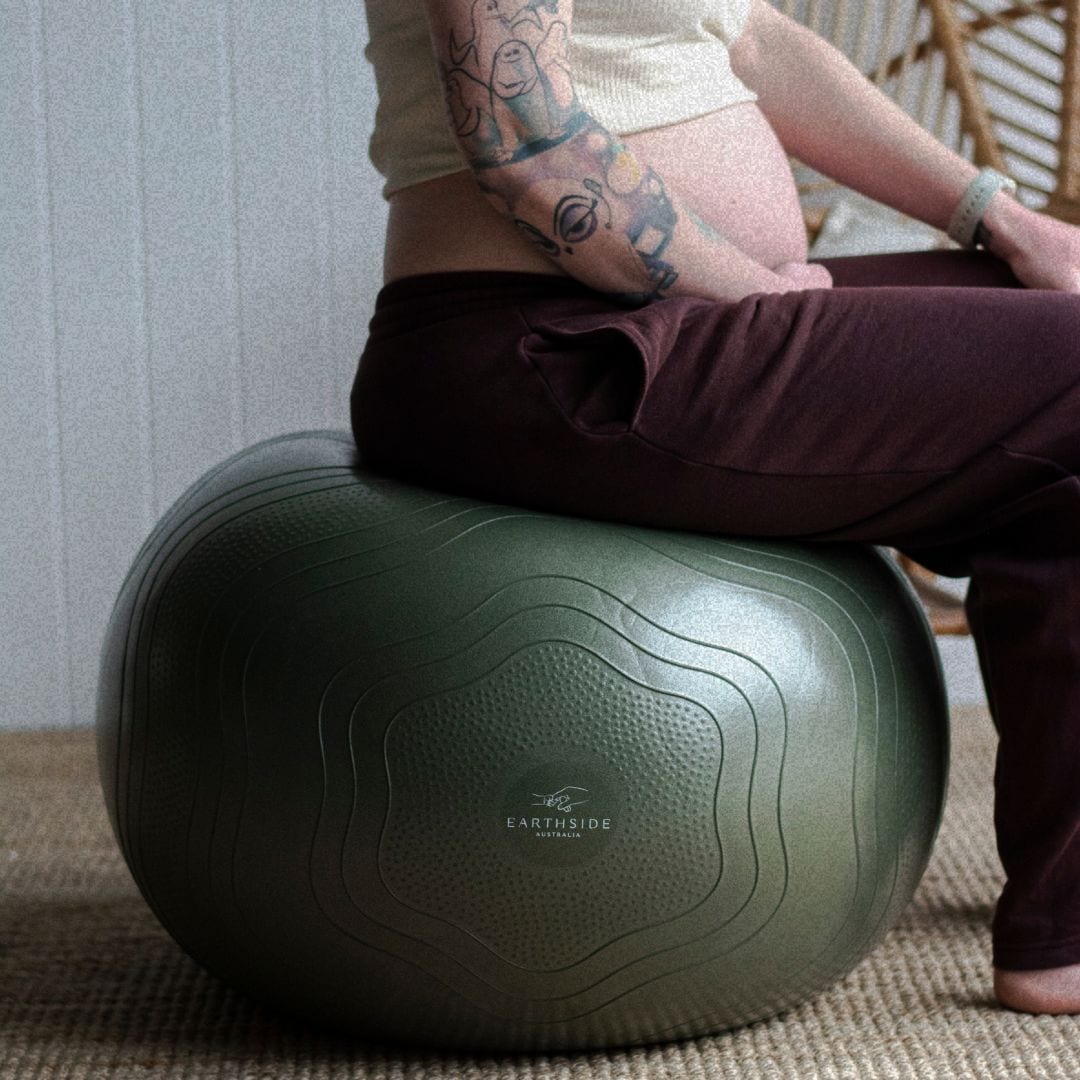
A birthing ball is one of the most versatile tools you can have during pregnancy and labour. Discover its benefits, how to use it, the best exercises to try and how to choose the right size for you.
If you’ve spent any time looking into natural labour, birth preparation or ways to stay comfortable during pregnancy, chances are you’ve come across a birthing ball.
At first glance, it might not look like anything special. It’s just a large inflatable ball after all.
But for many women, a birthing ball becomes one of the most used items in pregnancy, labour and even the weeks that follow birth.
I remember thinking a birth ball was something I’d use occasionally for a few stretches in late pregnancy. In reality, it became part of daily life. I sat on it while working, rolled my hips on it when my back ached, leaned over it during labour and later bounced on it while settling a newborn who absolutely had to be bounced to sleep.
The beauty of a birthing ball isn’t that it performs some kind of magic trick. It’s that it encourages movement. And movement can be incredibly helpful during pregnancy and labour.
Whether you’re newly pregnant and curious about the benefits, approaching your due date or wondering if a birth ball is actually worth buying, here’s everything you need to know.
What Is a Birthing Ball?
A birthing ball is a large inflatable exercise ball used during pregnancy, labour and postpartum recovery.
You might also hear it called a birth ball, pregnancy ball, yoga ball or exercise ball. While there are slight differences between some exercise balls on the market, the term birthing ball generally refers to a stability ball used specifically to support comfort, movement and positioning throughout pregnancy and labour.
Unlike a standard chair or couch, a birthing ball allows your pelvis to move freely. Even when you’re simply sitting on it, your body is making small adjustments that encourage movement and engagement.
That freedom of movement is one of the reasons so many women find a birth ball helpful throughout pregnancy and labour.
Benefits of Using a Birthing Ball During Pregnancy
One of the biggest surprises for many women is how often they use their birth ball before labour even begins.
As your baby grows, everyday activities can start to feel uncomfortable. Sitting for long periods, working at a desk, watching television or even eating dinner can place pressure on your lower back, hips and pelvis.
A birthing ball offers an alternative.
It encourages movement
Pregnancy often comes with the well-meaning advice to rest. While rest is important, gentle movement can also help many women feel more comfortable.
Sitting on a birthing ball naturally encourages subtle movement through the pelvis. You might find yourself rocking, swaying or making circles without even thinking about it.
It can help relieve lower back discomfort
As your centre of gravity changes during pregnancy, extra strain is often placed on the lower back.
Many women find that sitting on a birth ball feels more comfortable than sitting on a couch or dining chair because it encourages a more upright posture and allows the pelvis to move freely.
It supports an upright position
An upright position can feel more comfortable during pregnancy than reclining for long periods.
Using a birthing ball throughout the day can help break up long stretches of sitting and encourage regular movement.
It’s surprisingly versatile
A birth ball can be used while watching television, working from home, reading, talking on the phone or helping older children with activities.
It doesn’t have to be reserved for labour. For many women, it becomes part of everyday life long before contractions begin.
How to Use a Birthing Ball During Labour
If there is one thing a birth ball does particularly well, it’s making movement easier during labour.
Labour isn’t something that needs to happen lying flat on your back. Many women naturally find themselves changing positions, swaying, leaning forward and moving throughout labour.
A birth ball supports those movements while providing a comfortable place to rest between contractions.
Sitting and swaying
One of the simplest ways to use a birthing ball is to sit on it and gently sway from side to side.
Many women find this rhythmic movement comforting during contractions.
Hip circles
Slow circles through the hips can feel particularly good during early labour.
Some women prefer large circles while others find smaller, slower movements more comfortable.
Figure eights
Instead of moving in a circle, imagine tracing a figure eight with your hips.
This movement encourages mobility through the pelvis and can feel intuitive during labour.
Leaning forward over the ball
This is one of the most popular labour positions for a reason.
Place the ball on a bed, couch or birth mat and lean forward onto it while kneeling.
Many women find this position comforting during contractions because it allows them to rest their upper body while keeping pressure off their back.
Hugging the ball
Sometimes labour isn’t about finding the perfect position. It’s simply about finding a position that feels manageable.
Wrapping your arms around the ball and resting into it can provide a sense of support and stability during contractions.
Birthing Ball Exercises to Try During Pregnancy
You don’t need an elaborate routine to benefit from a birthing ball.
A few minutes of movement each day can be enough.
Some simple exercises include:
• Gentle hip circles
• Figure eights
• Pelvic tilts
• Side-to-side rocking
• Supported squats using the ball against a wall
• Forward-leaning stretches while resting on the ball
The goal isn’t fitness. The goal is comfort, movement and helping your body feel good as pregnancy progresses.
Can a Birthing Ball Help Start Labour?
This is one of the most common questions women ask.
The honest answer is that a birthing ball won’t start labour on its own.
There is no evidence that simply sitting on a birthing ball will trigger labour to begin.
What it can do is encourage movement, comfort and pelvic mobility during the final weeks of pregnancy. Many women enjoy using a birthing ball while walking, stretching and staying active as they approach their due date.
Think of it as a tool that supports your body rather than a method for inducing labour.
Can a Birthing Ball Help Baby Get Into Position?
A birthing ball cannot guarantee your baby will move into a particular position.
However, many women choose to use one because it encourages upright and forward-leaning positions rather than prolonged reclining.
The ability to move freely through the pelvis is one of the reasons birthing balls are commonly recommended during pregnancy and labour.
What Size Birthing Ball Do I Need?
Choosing the right size matters because a ball that is too large or too small can be uncomfortable to use.
As a general guide:
55cm ball
Suitable for women under 155cm tall.
65cm ball
Suitable for women approximately 155cm to 175cm tall.
75cm ball
Suitable for women over 175cm tall.
The most important rule is that when seated on the ball, your feet should rest flat on the floor and your hips should sit slightly higher than your knees.
If you’re between sizes, many women prefer sizing up slightly during late pregnancy to allow extra room for comfort.
Using a Birthing Ball After Birth
One of the reasons I recommend a birthing ball is because its usefulness doesn’t necessarily end once your baby arrives.
Many mothers continue using their ball during the postpartum period.
It can be a comfortable place to sit while feeding a baby, reading stories to older children or for a gentle return to exercise.
And if you’ve ever spent an evening pacing the house with a newborn who only wants to be held, you’ll understand why so many parents end up gently bouncing on a birthing ball long after labour is over.
Frequently Asked Questions
When should I start using a birthing ball during pregnancy?
You can start using a birthing ball whenever it feels comfortable. Many women begin using one during the second or third trimester as their growing bump makes traditional seating less comfortable.
Is a birthing ball safe during pregnancy?
For most women, yes. Birthing balls are commonly used throughout pregnancy and labour. Always follow the manufacturer’s safety guidelines and seek advice from your healthcare provider if you have any concerns.
Can I use a birthing ball during a hospital birth?
Absolutely. Many hospitals and birth centres have birthing balls available, and some women choose to bring their own.
What’s the difference between a birthing ball and an exercise ball?
A birthing ball is essentially a high-quality exercise ball being used specifically to support pregnancy, labour and postpartum recovery.
Is a birthing ball worth buying?
For many women, yes. It’s one of the few pregnancy purchases that can be useful during pregnancy, labour and the newborn period. Its versatility is part of what makes it such a popular tool among expectant mothers. You can purchase a birth ball here.